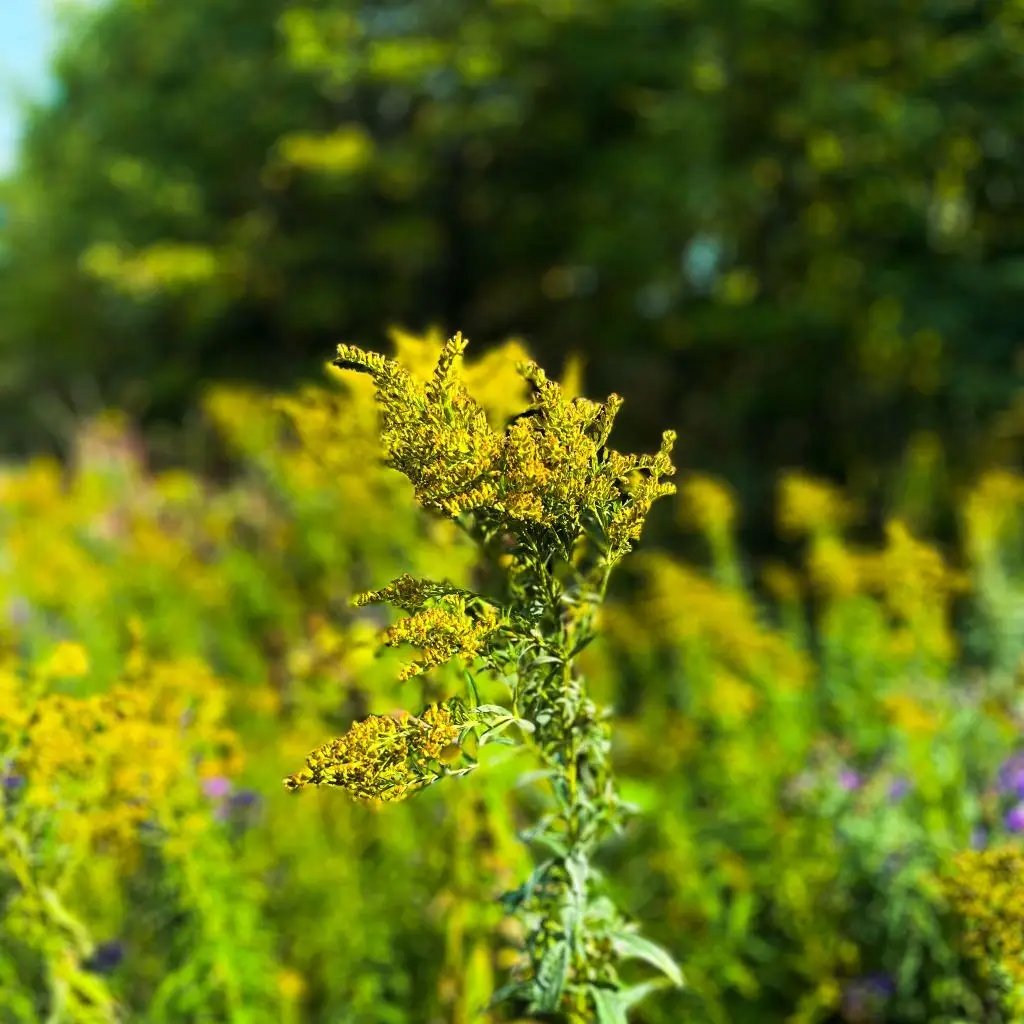
You suddenly come across a sea of gold, and amongst these flowers, there is a happy buzz of bees flying around.
This plant and wildflower is known as Canada Goldenrod, one of the most important pollinator plants.
This species is the most common form of Goldenrod in Ontario due to its ability to remain hardy in almost any condition- it’s even drought-resistant.
Did you know? Goldenrods are often confused for Ragweed, the two only share slight similarities. However, it is Ragweed’s fault when you feel stuffy- not Goldenrod.
These plants are rhizome-based and will grow fast in most environments whether it be full sun or shaded areas- allowing you to use it in a variety of ecosystems.
These golden giants can grow up to 7ft tall and their flowers make them go even that number!
A fun fact about these plants is that they are used by various insect populations to protect themselves when it rains.
As it rains, insects will hide under the dropping flowers and this creates perfect cover for them as rain falls.
Habitat
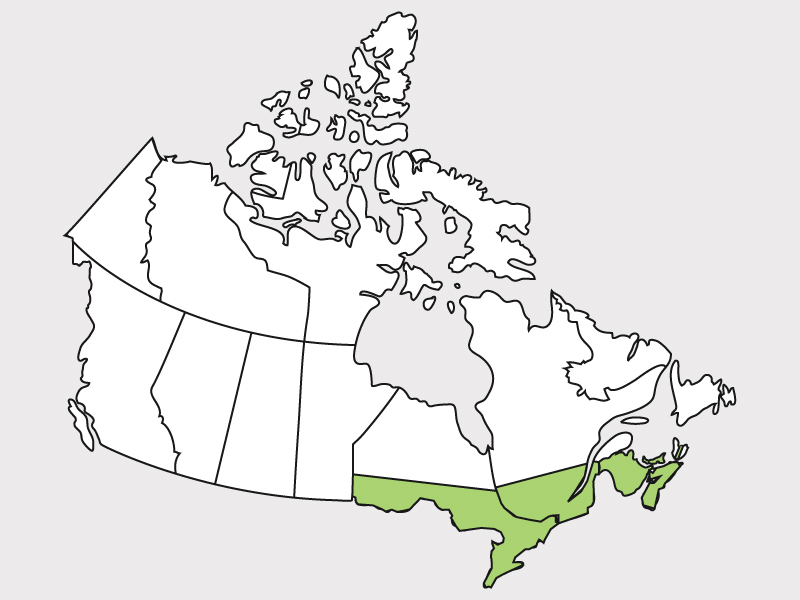
Canada Goldenrod is the most widely distributed of the Goldenrod species.
It can be found in 5 provinces in the country.
Furthermore, it is extremely hardy, having a rhizome root structure which allows its roots to dig deep into the ground in hardy terrain.
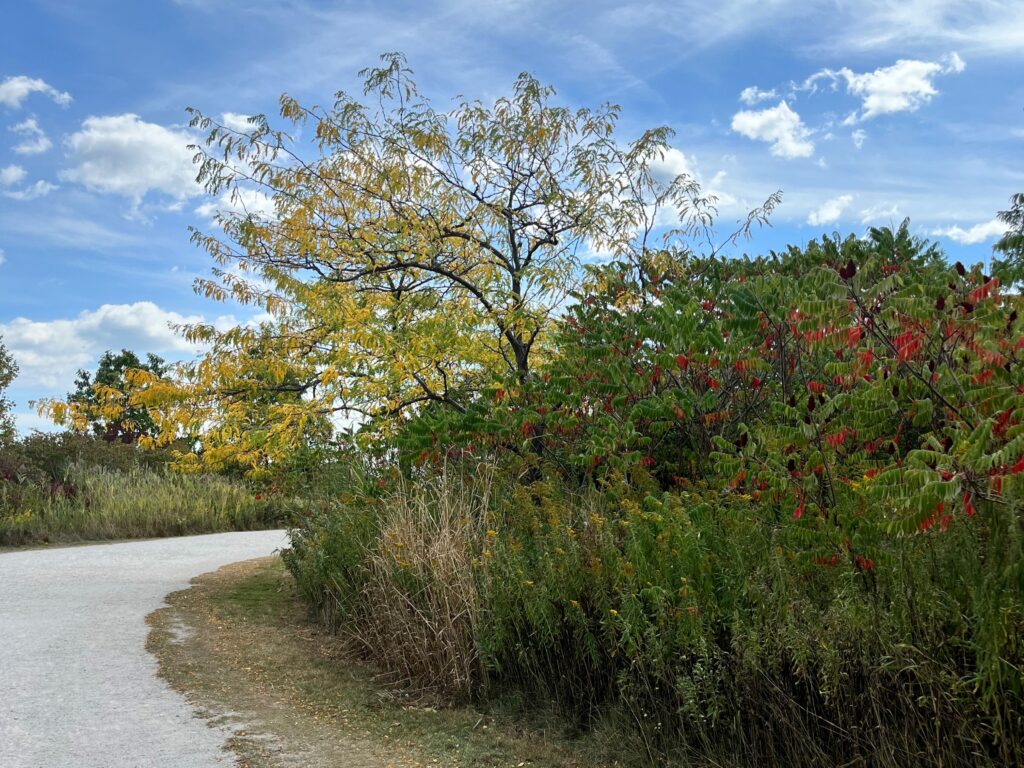
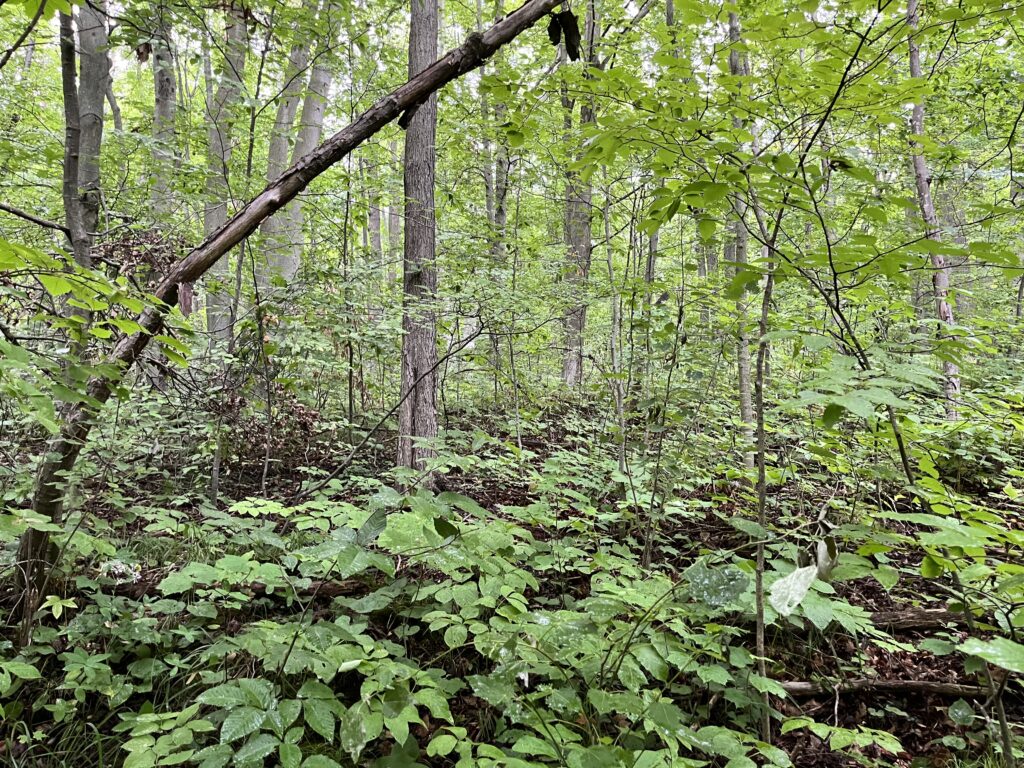
You can find Goldenrod in a variety of ecosystems such as wetlands, meadows, forested areas and prairie lands.
Its seeds are also carried via insects to further places which allows it to spread itself even faster.
However, it must be said that, unlike an invasive species, this is a native plant and can equalize itself in the ecosystems it is brought into.
Found On These ForestQuests
Humber Arboretum
Lower Donlands Park
Threats
This plant is considered the least concern by the Canadian Government due to its ability to spread and grow.
But other things may affect its ability to prosper- especially human activity.
Due to its similar appearance to ragweed, people will often try to tear down Goldenrod because they wrongfully blame it for their allergies.
Other threats include various caterpillar species overeating this plant to the point where it cannot grow back.