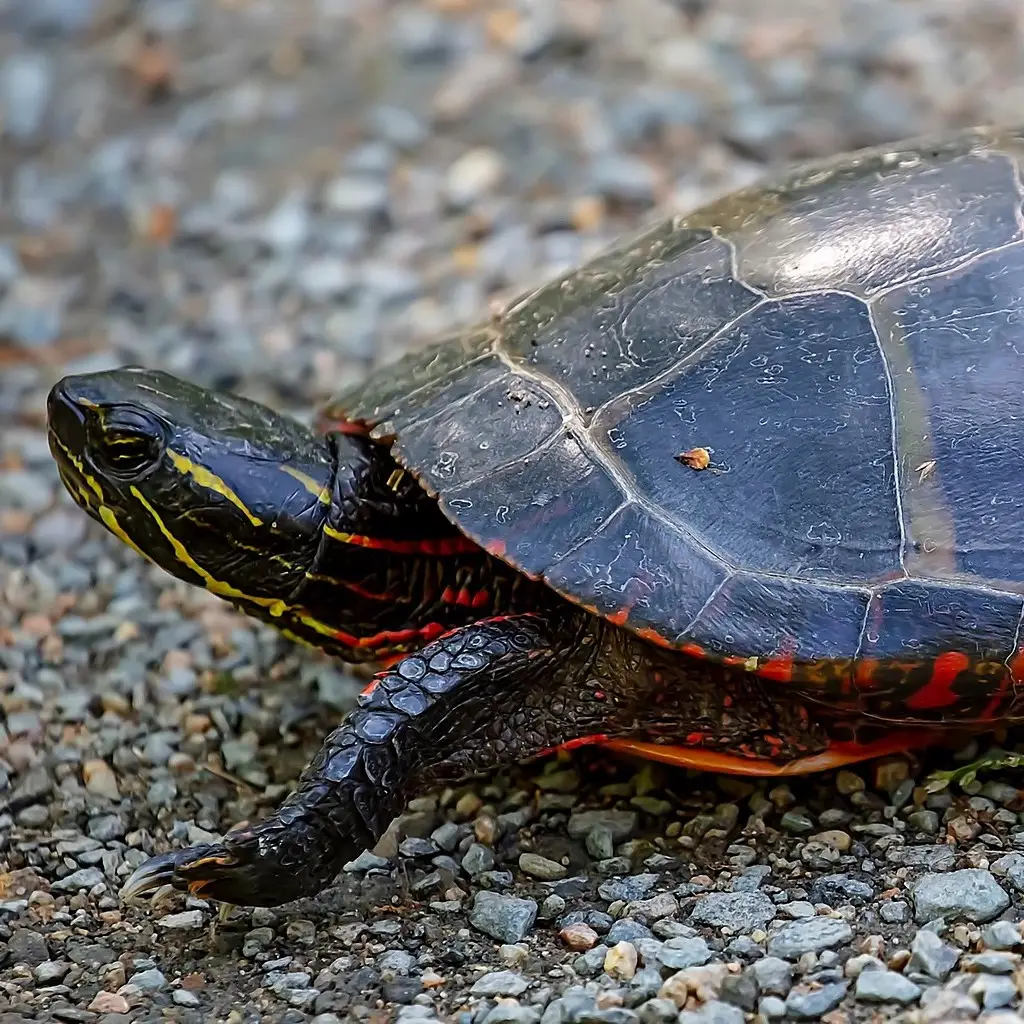
Basking over a rock, you may notice a freshwater turtle with a brightly coloured shell has come out of the water.
With streaks of yellow, red and orange covering its body and parts of its shell, these turtles are a visually stunning example of nature’s use of complimentary colours.
The Midland Painted Turtle is the common painted turtle species here in Ontario. It is a medium-sized turtle smaller than the snapping turtle or soft-shelled turtle.
Measuring about 25 cm in length from head to end of shell, despite their size these turtles are important to our freshwater areas.
Aiding in seed dispersal these turtles will eat vegetation they find such as flowers and other gestating plants, and will then excrement the seeds into new areas of the ecosystem.
This excrement is then used as nutrients for the seeds to thrive, and the cycle continues.
Did you know? Until the temperature reaches 15 to 20 degrees, freshwater turtles will remain inactive and asleep in their hibernating state.
One of the most noticeable markings on this turtle is on its underside (carapace) which is in the shape of a butterfly.
Habitat
There are three species of Painted Turtle in Canada, and they rarely inter-mingle or see each other due to their very defined ranges.
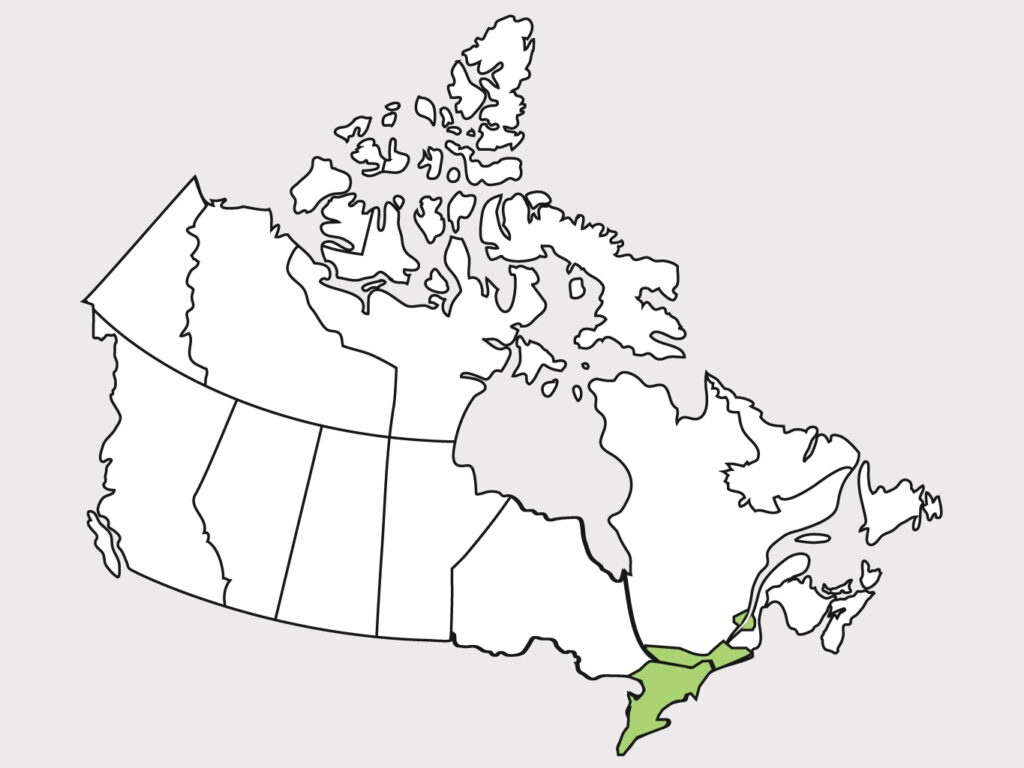
The Midland Painted Turtle is named as such due to its ranch being midland- meaning middle of the country which can only be found in Quebec and Ontario.
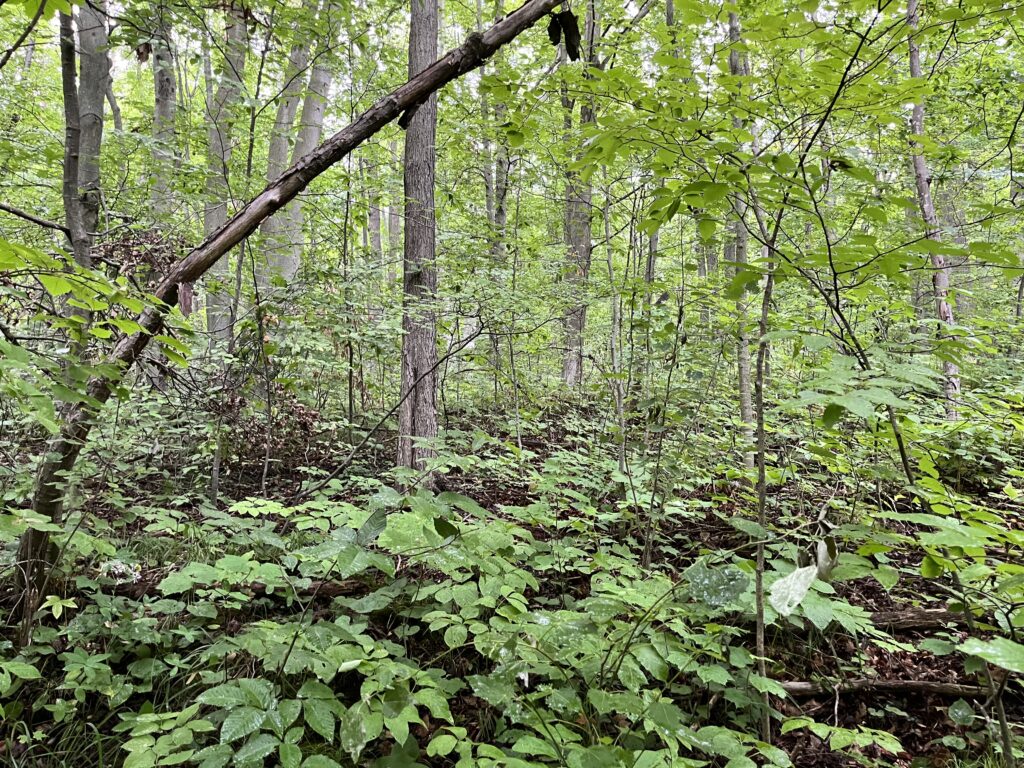
The Midland Painted Turtles will only be found where both a freshwater source and a healthy land ecosystem are found beside one another.
If either of these ecosystems is disturbed or polluted, our freshwater turtles will die out due to their sensitivity to pollution.
Found On These ForestQuests
Colonel Samuel Smith Park
Lower Donlands Park
Threats
This species is listed as Special Concern- however, there is an asterisk to this listing.
Only the populations of Midland Turtle that find themselves within urban areas are of special concern, as further out into Ontario and Quebec natural areas- the populations are thriving.
This means that the main threat to this species is population loss due to human interference.
Mainly, these turtles are commonly crushed by speeding cars as theturtles attempt to cross roadways.
People have also started to sell them illegally in the pet trade, and this has caused further population decline in urban areas.