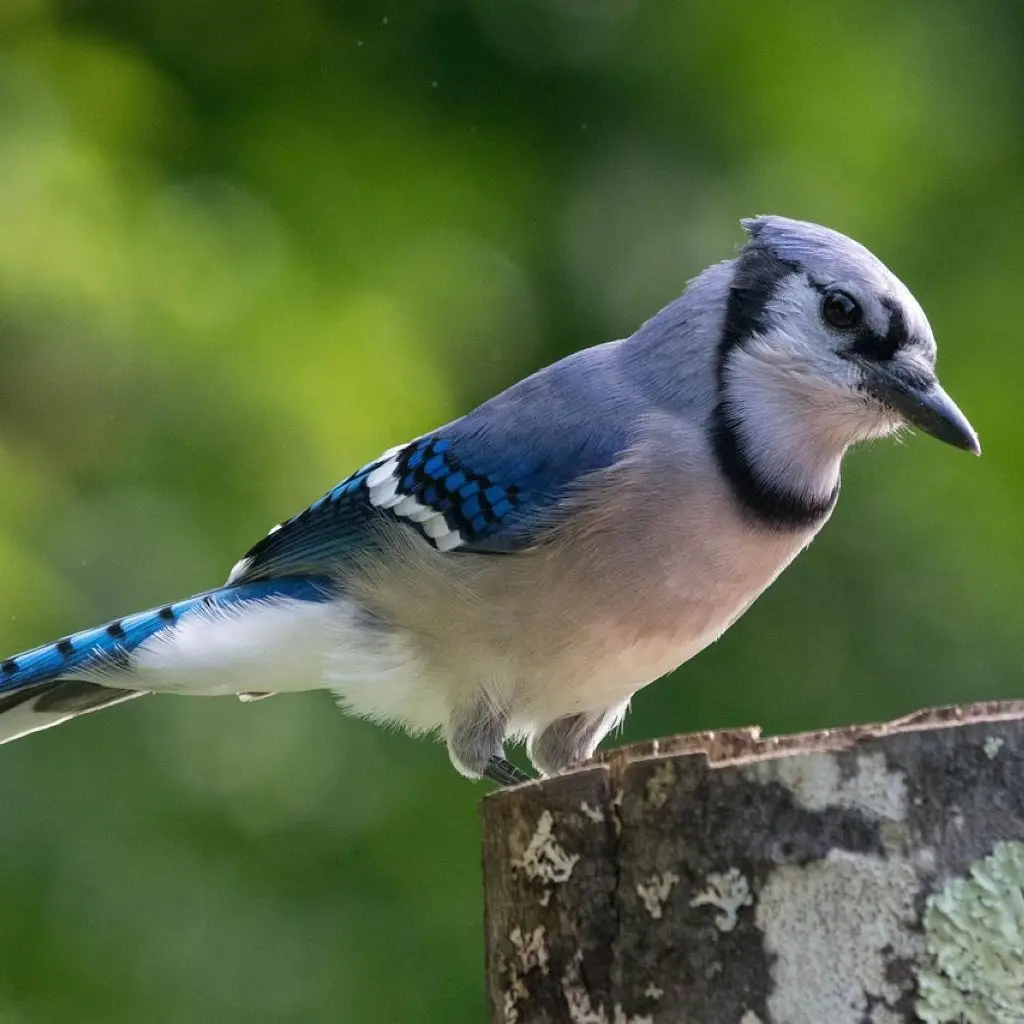
Speeding around the air, you may see a blue dart fly past you.
The Blue Jay is one of the most famous native birds in Canada, with many associating the bird with our country (or a well-known baseball team).
This bird grows up to 30 cm in length and is known to be a very excitable “bully” of a bird.
Blue Jays are faithful to one partner throughout their lives and will often be seen scoping trees and nesting areas- and will take out other birds’ nests if they like what they find.
Did you know? This bird isn’t blue, its feathers have an adaptation that reflects light a certain way that allows them to be perceived as this colour. Without this adaptation, they would appear light brown instead.
An interesting quirk of this bird is that it can mimic predatory bird cries, which is why there are reports of people hearing hawk shrills when these birds are present.
This quirk is an advantage to scare away other predators or birds that may steal their food or nesting areas.
Habitat
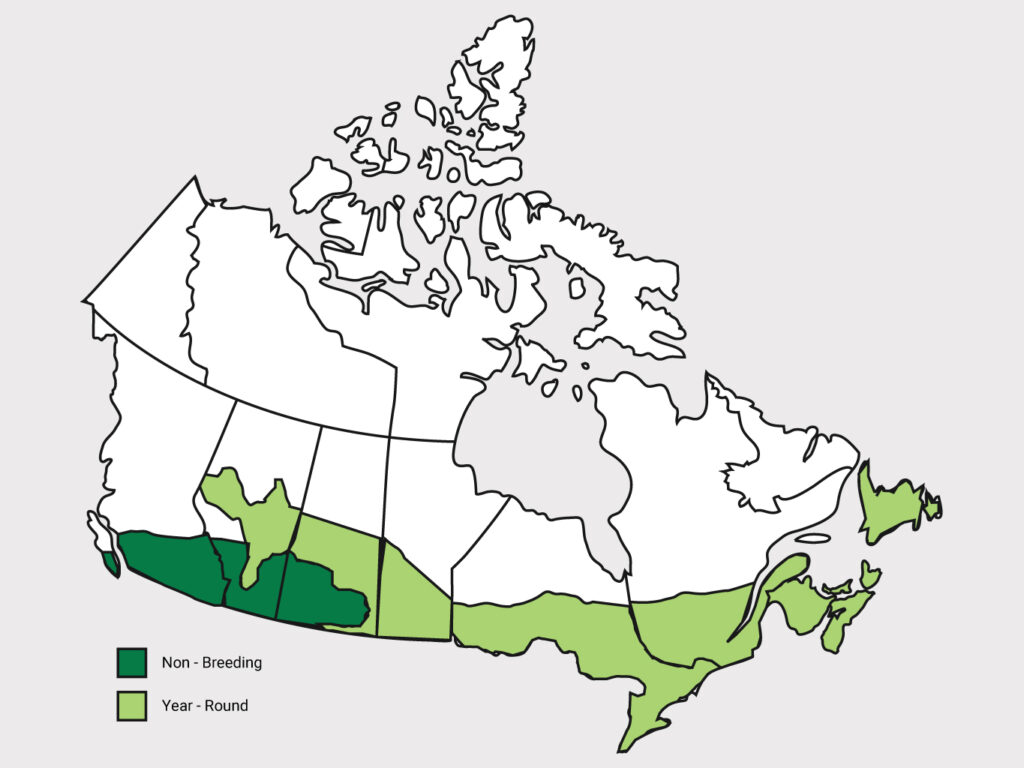
Blue Jays have a large range, yet they are generally considered non-migratory birds.
Blue Jays can be found as far south as the Gulf of Mexico and as far north as Edmonton, Alberta.
These birds will stay in the same area most of their life unless food and nesting areas become limited.
They also hate cold conditions and will move closer to bodies of water and warmer climates if it gets too cold.
During the winter months, huge populations of Blue Jays can be seen on Pelee Island due to its generally mild climate at that time.
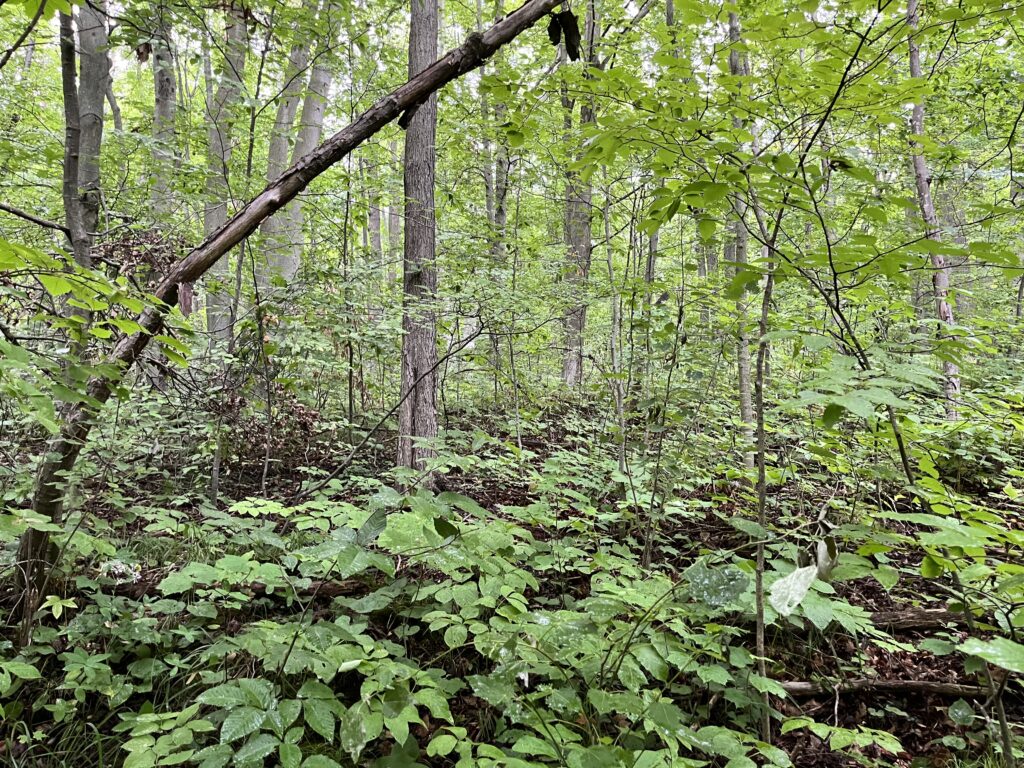
These birds prefer mixed deciduous tree areas and usually won’t nest in coniferous forests. They also can be found in prairies but won’t spend much time there.
Found On This ForestQuest
Lower Donlands Park
Threats
The Blue Jay is considered to be of least concern due to its large range and healthy population growth.
However, the Blue Jay is susceptible to climate change due to its dislike of colder temperatures.
It is also sensitive to pesticides, as it likes to steal farm crops for its use in growing a family.