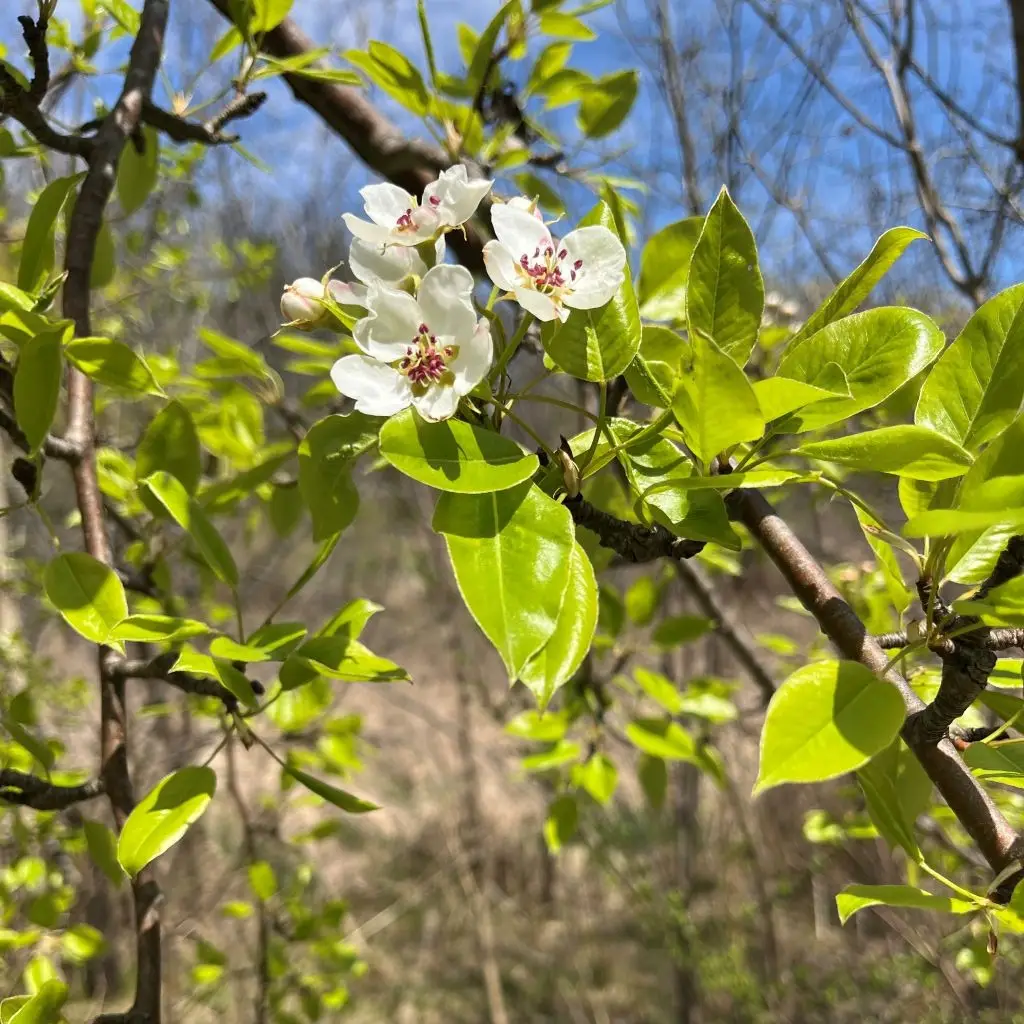
One of the most edible trees you’ll find along your quest is the Canada Plum Tree.
Otherwise known as the Black Plum tree, this flowering short tree is native to eastern Canada.
It is also always confused with the more widely distributed Wild Plum which is also a native species.
However, there are noticeable differences between the two species.
Canada Plum tends to have a less bush-like appearance and grows in a more upward pattern compared to the wild plum which looks more like a shrub.
Did you know? The Canada Plum can grow upwards to 9m tall!
Furthermore, their flowers are different despite them being white, the Canada Plum always has a pinkish undertone to it.
The leaves of the Canada Plum are also rounded compared to the more pointy leaves of the Wild Plum.
Finally, the fruit is also vastly different, as the wild plum is more purple, while the Canada Plum has a smaller black fruit.
Habitat
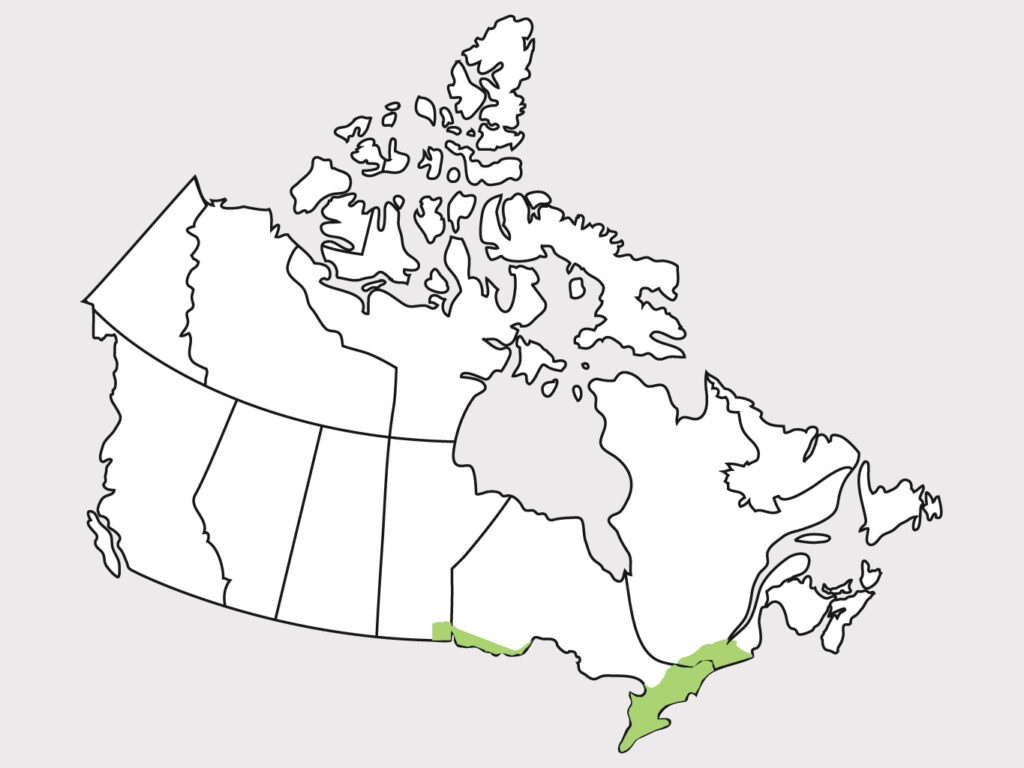
The Canada Plum is found primarily in Canada, unlike its wild counterpart. From southern Manitoba to Nova Scotia in the east.
This tree grows mainly in pasture-like areas near farmland or river valleys where the soil may contain more lime/acidity.
This plant is also used in ornamental ways due to its beautiful flowers and edible fruit. As long as you meet its requirements for a high acid soil it will grow almost anywhere.
This tree also tends to grow far between instances of itself, unlike many other trees- it thrives when it is the only plum tree around it.
Found On This ForestQuest
Cedarvale Park
Threats
The Canada plum is listed as a Least Concern species due to its ability to grow fast in various areas in the southern part of the country.
However, due to its inability to survive colder temperatures, climate change is a major risk to it.
This can weaken the local trees further and make them susceptible to parasites and viruses.
The Plum Pox virus is an example of this that targets species in the Prunus genus.
The main mode of transmission of this virus is through aphids feeding on infected plants and then spreading it to other trees.
You can tell if a plum tree has been infected by its deformed fruit, weird rings on the fruit, decreased flowers and wilty appearance to the leaves.