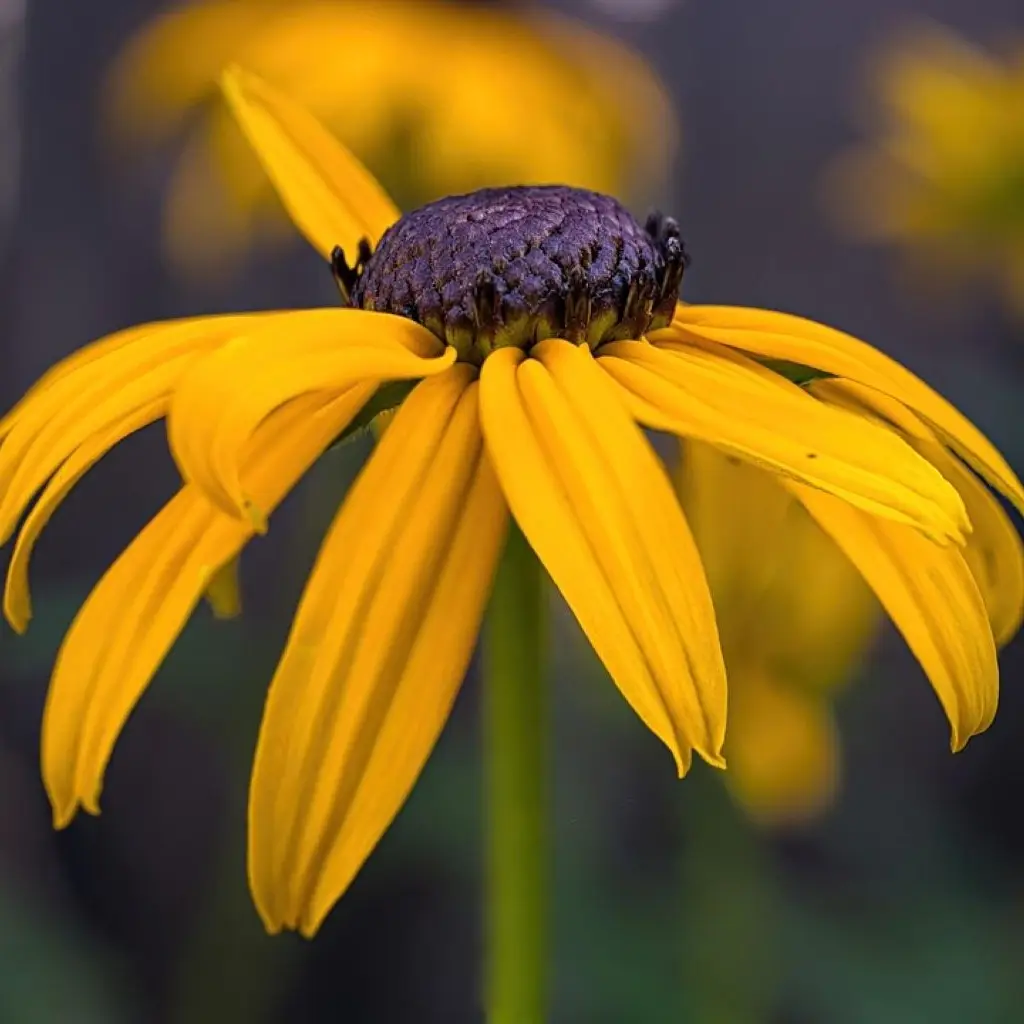
One of the brightest wildflowers you can come across is the Black Eyed Susan.
This wildflower has striking yellow petals with a black/brown pit and grows just under a metre tall.
Did you know? This plant is closely related to sunflowers!
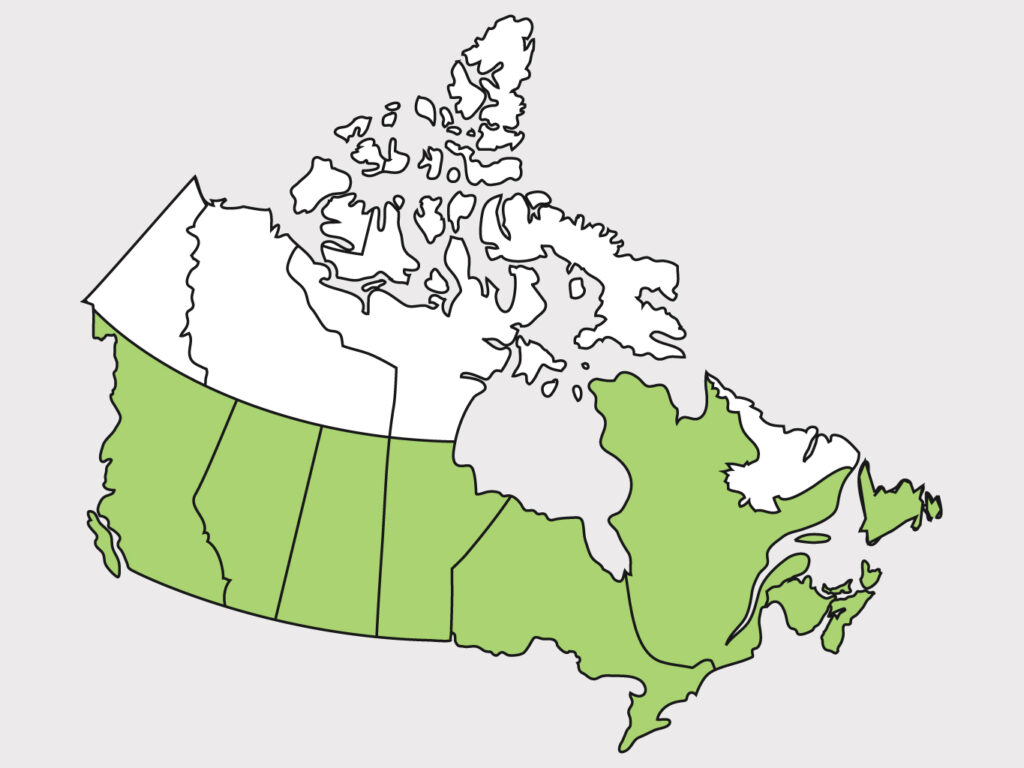
This plant is a favourite amongst conservation authorities as it is native to almost every part of Canada.
It is also a favourite amongst pollinators and pollinator gardeners as the pollen is attractive to butterflies and bees.
Furthermore, this plant’s leaves let it become a host plant for a type of caterpillar called a Silvery Checkerspot.
Turning over its’ leaves you may always find multiple caterpillars munching away at its leaves.
Its’ seeds are also a favourite amongst the bird population however it is advised not to consume its seeds ourselves.
The seeds are considered poisonous to us so it is best to stay clear of them- even though the side effects may be minimal.
Habitat
As stated above this plant has been used across Canada in conservation efforts due to its huge ecological spread.
This plant will thrive in meadows, prairies and forested areas alike due to it liking shaded areas.
Black Eyed Susans will also thrive in contained garden settings where you want to increase the biodiversity of your garden and attract more pollinators.
Found On These ForestQuests
Cedarvale Park
High Park
Threats
Due to its distribution and ability to grow in most regions in the country, this plant is not endangered.
However, it does have several things that can disturb and kill it including aphids and other invasive species taking up the nutrients in the soil.
This plant is rather hardy so if black-eyed susans disappear from an area, it is a telling sign that something may be wrong in that ecosystem.