We’ve seen beetles with this colouration all over, the red body and the black spots, however only one species of beetle with this colouration is native.
The Nine Spotted Ladybird is the native version of this beetle and is an efficient hunter of other insects- especially aphids, mites and ticks.
This beetle in particular has nine prominent spots that are spread out over its back and are not clustered like the Asian ladybird or the seven-spotted ladybird – which are both invasive.
Did you know? Ladybirds are able to excrete a smell that attracts other bugs to it. It even uses this smell to attract mates.
The Nine spotted Ladybird also has a more circular head area compared to its cousins, having nearly no white spots or markings.
This beetle also does not bite humans like its cousins- if a ladybird bites you it is not this specific species.
Their lifespan is typically 2-3 years depending on weather, temperature and available food.
Habitat
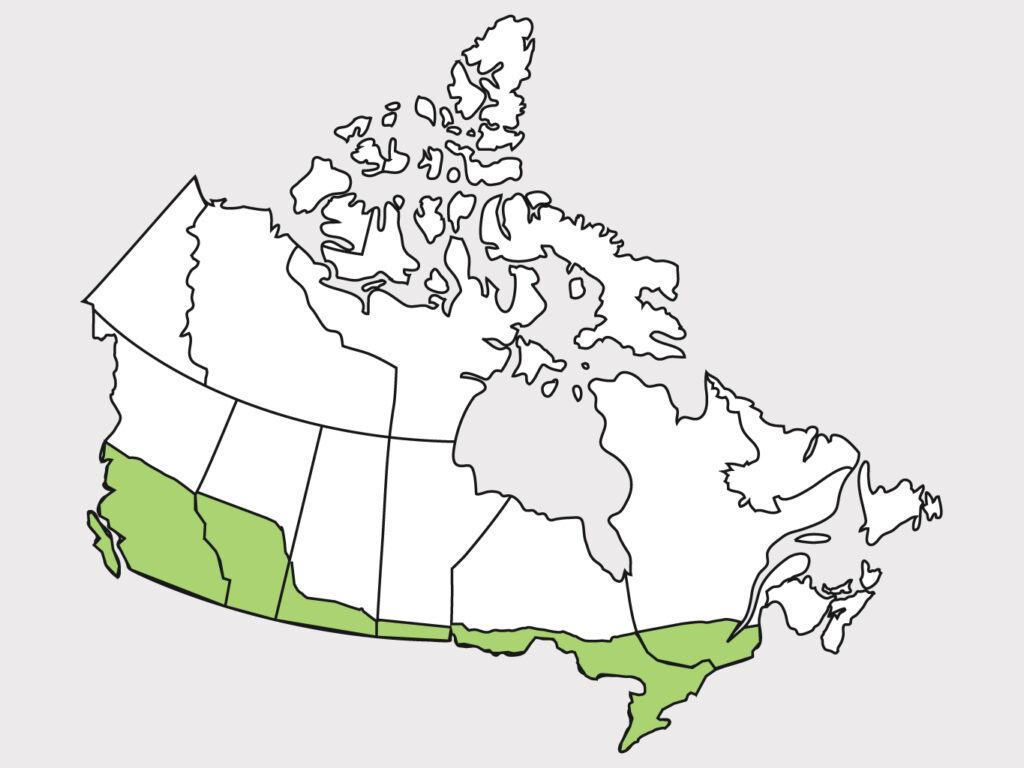
The Nine Spotted Ladybird can be found across Southern Ontario, however, sightings are becoming rare due to its invasive cousins.
It lives in a large amount of ecosystems from forests to wetlands to farmland areas.
Anywhere that has ticks and aphids aplenty you will find this beetle or its invasive variants.
Found On This ForestQuest
High Park
Threats
This species is considered endangered and in some populations- extirpated by the Ontario government.
This means there is not enough data on it or its population due to other ladybirds coming into Canada.
The Asian ladybird is most problematic as it likes to eat its kind. This causes the Nine Spotted Ladybird to have a hard time doing its natural job of hunting local pests due to having a predator that looks and smells just like it.