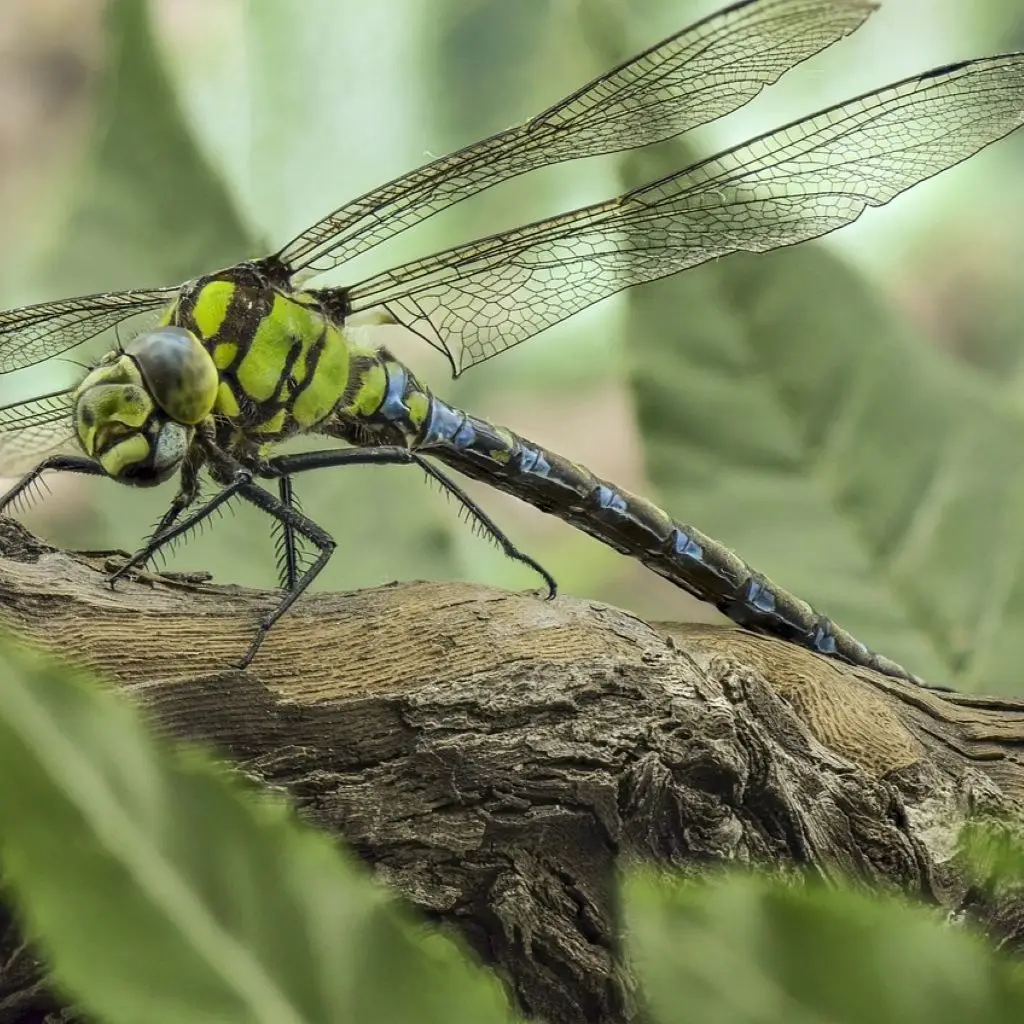
The Common Green Darner is a bright green species of dragonfly capable of flying from coast to coast in Canada.
Not only are these insects capable of flying great distances, but they are also capable of doing so very quickly- they can fly at 58 kmph!
The Green Darner is mainly active during the day and only stops flying midday for its afternoon feed.
It is an effective hunter and never seems to stop eating, even in the air and is capable of catching small flies as it zooms about.
Did you know? The green darners’ larvae (known as nymphs) can eat tadpoles whole and are effective hunters in their own right.
The Green Darner reaches a size of about 84 mm in length when fully grown with a wingspan of 11.4 cm.
There are also slight differences in colouration between males and females. The males are much more colourful, while the females have a more bronze/brown look.
This dragonfly has a bi-annual lifecycle where they remain nymphs for about a year and will then metamorphize into adults and migrate north as the weather warms.
After the first sign of frost, they return south to mate and the cycle continues.
Habitat
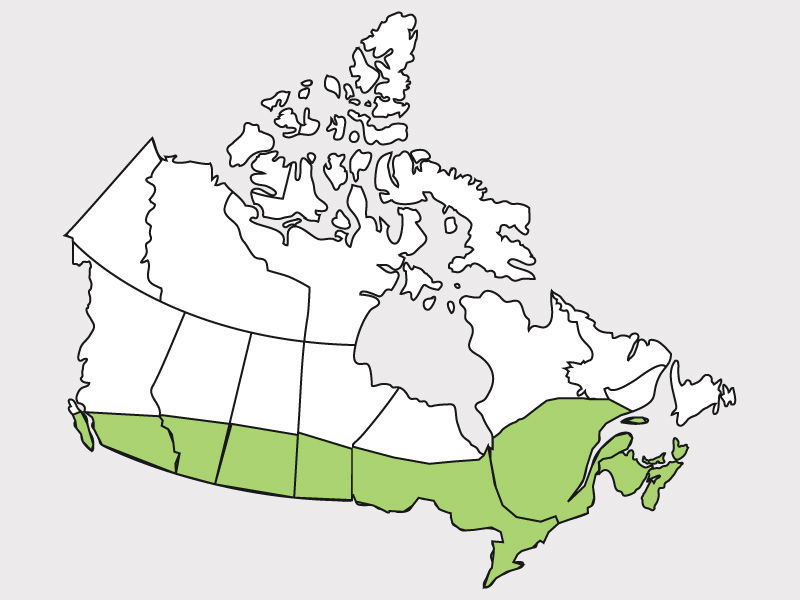
The Common Darner hates colder weather and so they are typically found in the warmest parts of each province.
During the winter this dragonfly will fly down to Mexico where it will mate and give birth to its nymphs that will migrate north the following year.
They can often be found near freshwater ponds, lakes and marshlands.
They are known as the most effective killer of mosquitos and will usually be in the same environment as a mosquito infestation.
Found On These ForestQuests
Cedarvale Park
Toronto Islands Lakeshore Trail
Threats
Common Darners are not at risk and are listed as a Least Concern species.
However, the nymphs are highly susceptible to water pollution and will die if the water is contaminated.
The adults are also hunted down by common bird species like the Blue Jay and Common Robin.
Finally, the Green Darner must also deal with the constant stressor of mite infestations that drain the Darner from the inside.
If you see a Green Darner on the ground, dead, and lacking colouration – it is due to mite infestations.


One Response