
Overview
Rushing along the forest floor, you could have sworn you saw a snake by your feet.
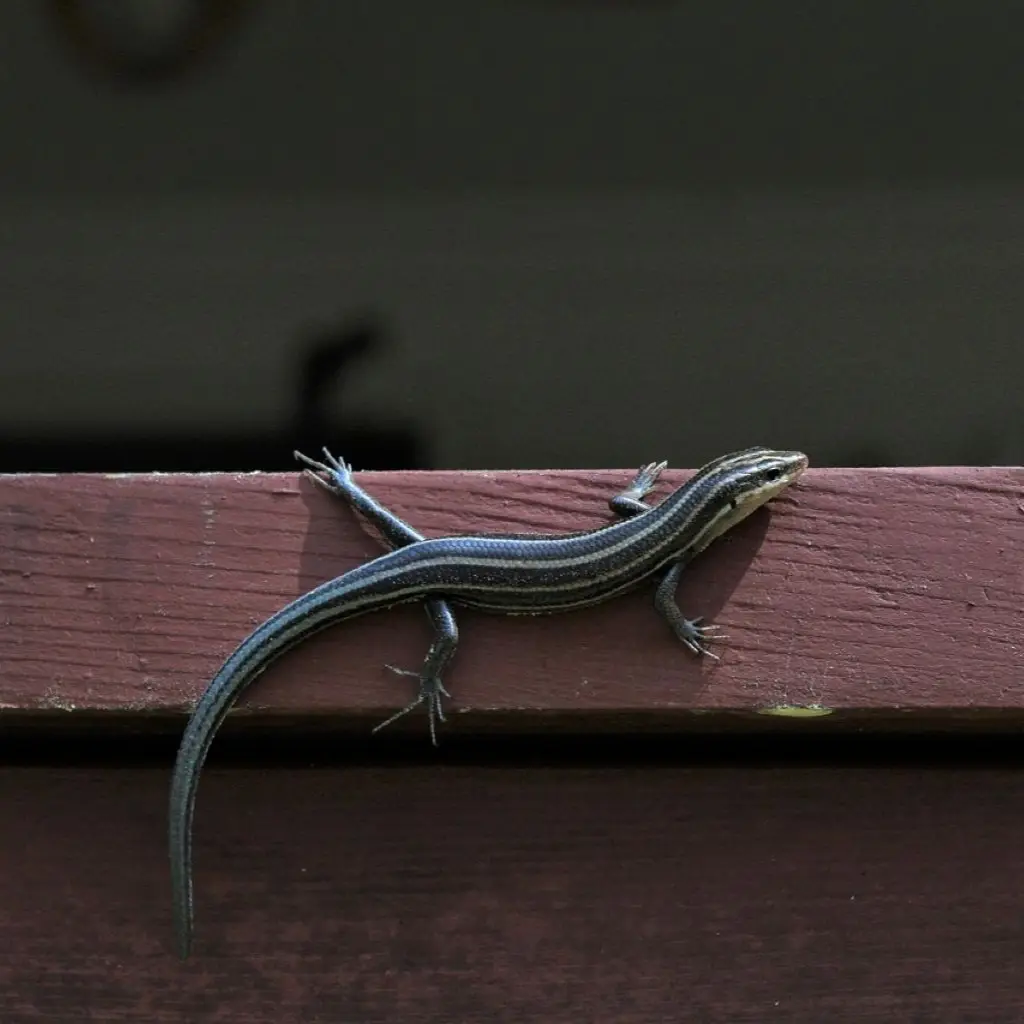
Although this is a common thought amongst many Questers’, this little lizard is the only true lizard in all of Ontario.
Meet the Five-Lined Skink, a fast and agile hunter that has its range confined to southwestern Ontario.
The Five-Lined Skink begins life as a lizard with 5 strips that line its upper body and scales that shimmer blue, green and red in direct sunlight.
As these lizards grow up, they lose that sheen and become primarily black and grey with the five strips.
They are also diurnal, meaning they are only active during the day.
The moment the sun goes down, this lizard will go to sleep and wait for the sun to shine once more.
Did you know? Most people think Salamanders are lizards, this is false. Lizards like the Five-Lined Skink have scales and claws- while Salamanders do not have either and only live in water. Five Lined Skinks can only live on land.
Five-lined skinks are solitary creatures and live their lives entirely on their own- hunting bugs and arachnids as their main prey source.
Habitat
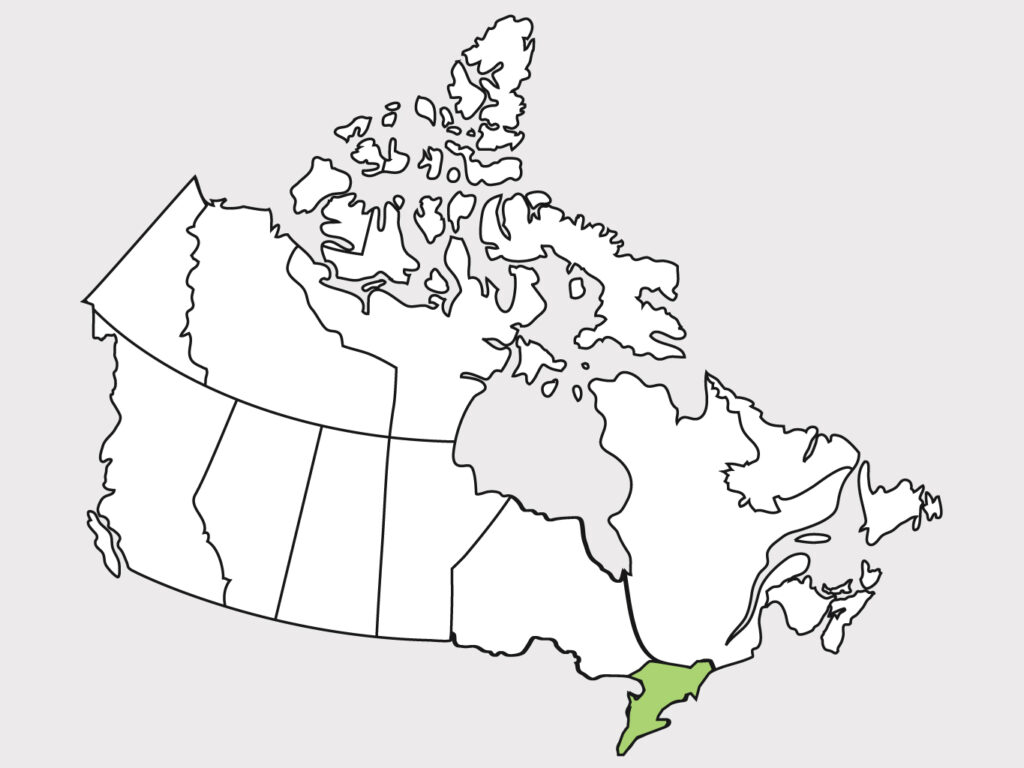
The Five Lined Skink has a small range in Canada and can only be found in South Western Ontario, as far south as Windsor and north as Sudbury.
Two populations are defined by a different gene pool, the Carolinian and the Canadian Shield populations.
The Canadian Shield population is found further north, while the Carolinian population is found all over Southern Ontario and can even be found in cities like Toronto.
They live under rocks, and dead logs and require a thick underbrush to thrive.
Females hatch their eggs in burrows under rocks and logs so they do not get eaten or disturbed.
Found On This ForestQuest
Threats
The Five-Lined Skink is considered Endangered by the Province of Ontario and the Canadian Government.
This is due to its small range and many stressors that cause it unable to thrive in many ecosystems now.
The main factor is human interference, as the Five-lined skink thrives in forest settings with lots of rocks, bushes and uninterrupted habitats.
Due to development, this species is becoming fragmented across Southern Ontario. This makes it harder to find a mate that they are not related to.
The pet trade has also found these species to be attractive due to its label as Ontarios’ only lizard. Taking a Five-Lined Skink is illegal in Ontario.
Finally, the Five-Lined Skink has to deal with an apex predator in our cities, the Raccoon that seems capable of wiping out entire populations when the two are near each other.
The Five-Lined Skink does have an interesting escape strategy, however, as when it feels threatened – it can seamlessly lose and drop its tail from its body.
Sources:
https://ontarionature.org/programs/community-science/reptile-amphibian-atlas/five-lined-skink/
https://www.ontario.ca/page/common-five-lined-skink
https://www.ontario.ca/page/common-five-lined-skink-recovery-strategy
https://www.natureconservancy.ca/en/what-we-do/resource-centre/featured-species/reptiles-and-amphibians/five-lined-skink.html
https://blog.ontarioparks.ca/5-cool-facts-about-skinks/
https://www.canada.ca/en/environment-climate-change/services/species-risk-public-registry/management-plans/five-lined-skink-great-lakes-st-lawrence-proposed-2013.html