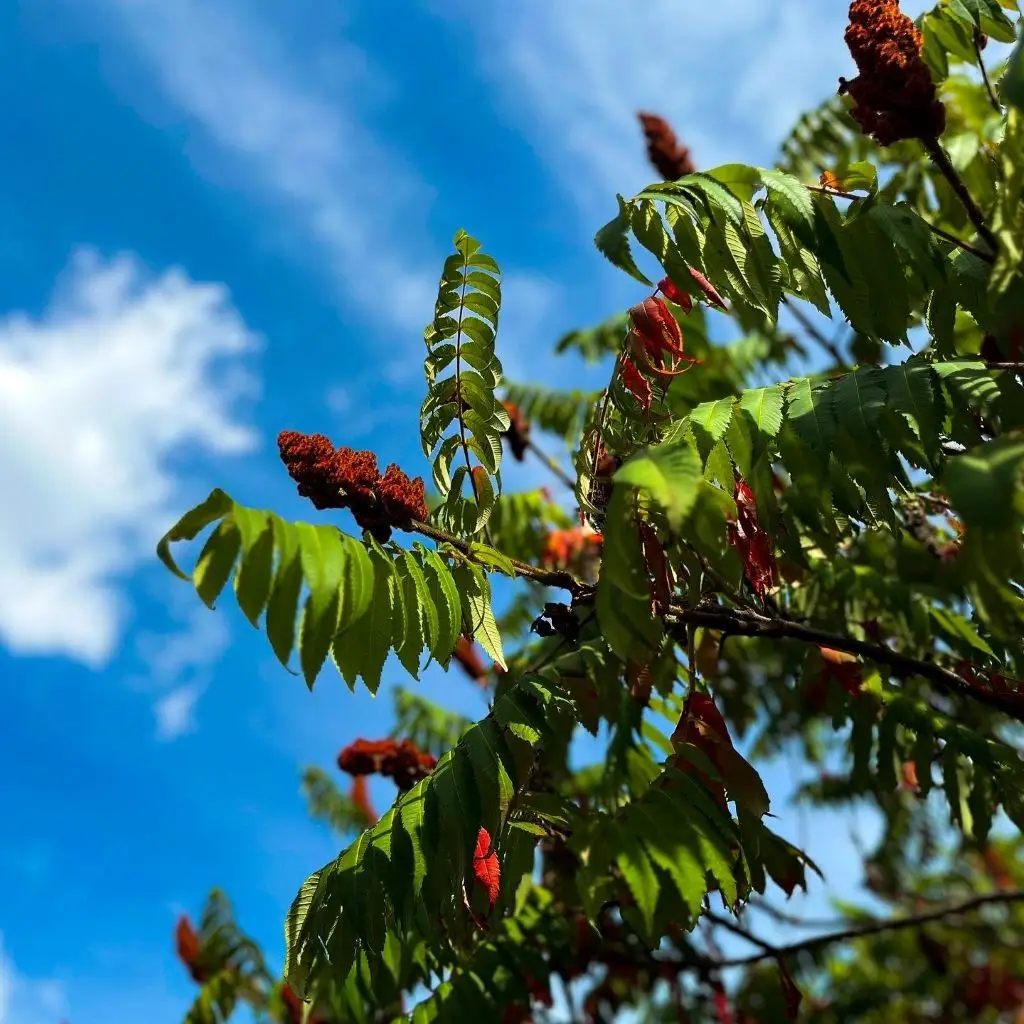
A tree/shrub that may seem more alien to you is the Staghorn Sumac.
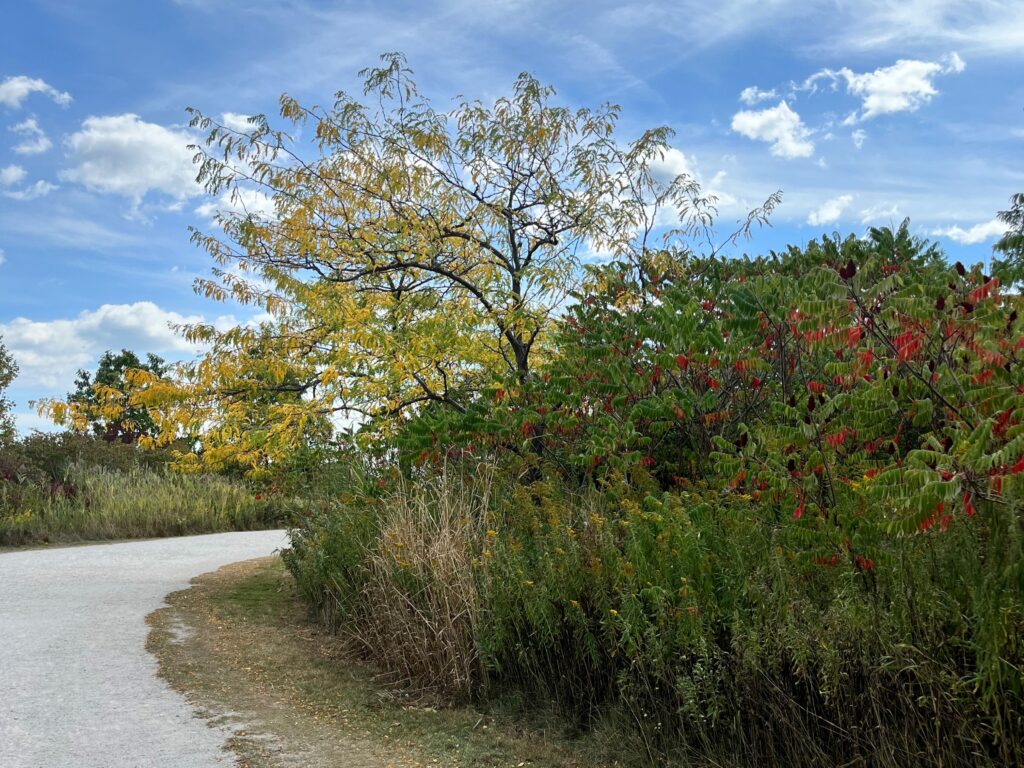
This particular shrub changes colour through the year with its deep green leaves turning a brighter red in the fall.
Furthermore, this plant begins to flower a yellowish cluster in mid-May and changes to a deep red as the flowers start to ripen into fruit between July to September.
This Shrub is often confused with trees due to its structure and size, as it can grow up to 6m tall.
It’s also a long-lasting shrub as it can live upwards to 50 years in the right conditions.
Did you know? These shrubs have been used by the indigenous people for thousands of years. The fruit has medically recorded healing properties and can be incorporated into your cooking.
Another interesting thing about this shrub is that it thrives when grouped with more Staghorn Sumacs.
In public settings, conservation authorities will usually plant them as such for them to maximize their ability to thrive in restored ecosystems.
This shrub is also an important pollinator plant and has a unique quality in attracting both native and non-native pollinators to its flowers due to how sweet it is.
Habitat
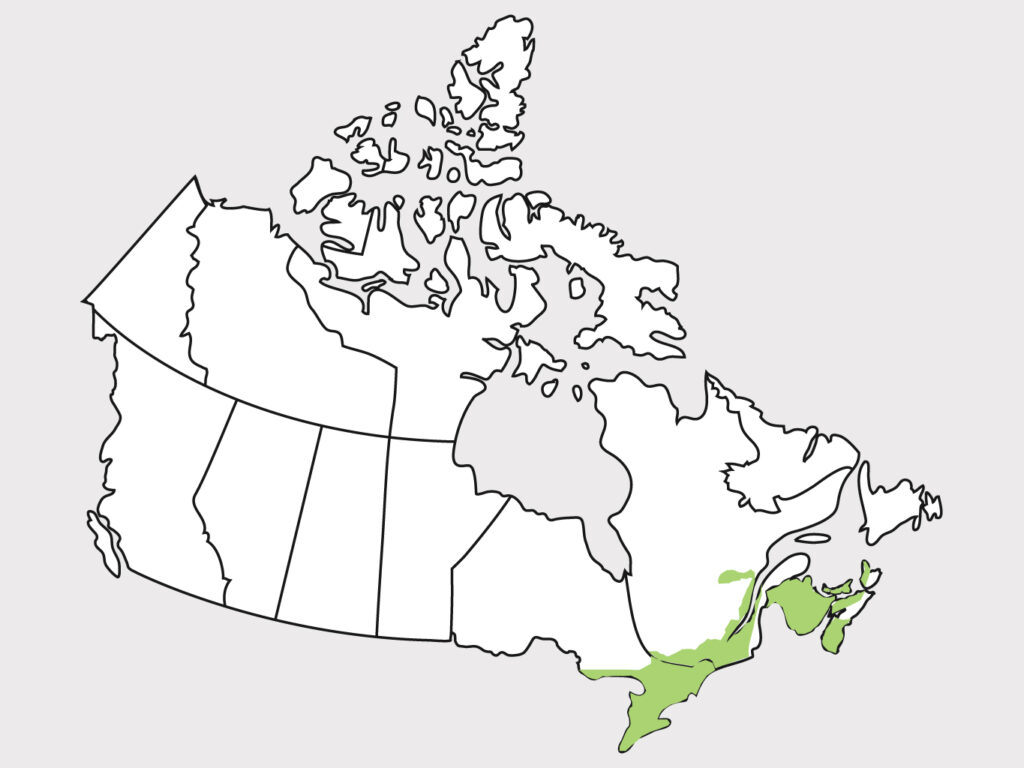
The Staghorn Sumac has a large range in eastern Canada. It can be seen from the western end of Lake Superior to the eastern end of Nova Scotia.
It is extremely drought-resistant and able to live through most cold weather events.
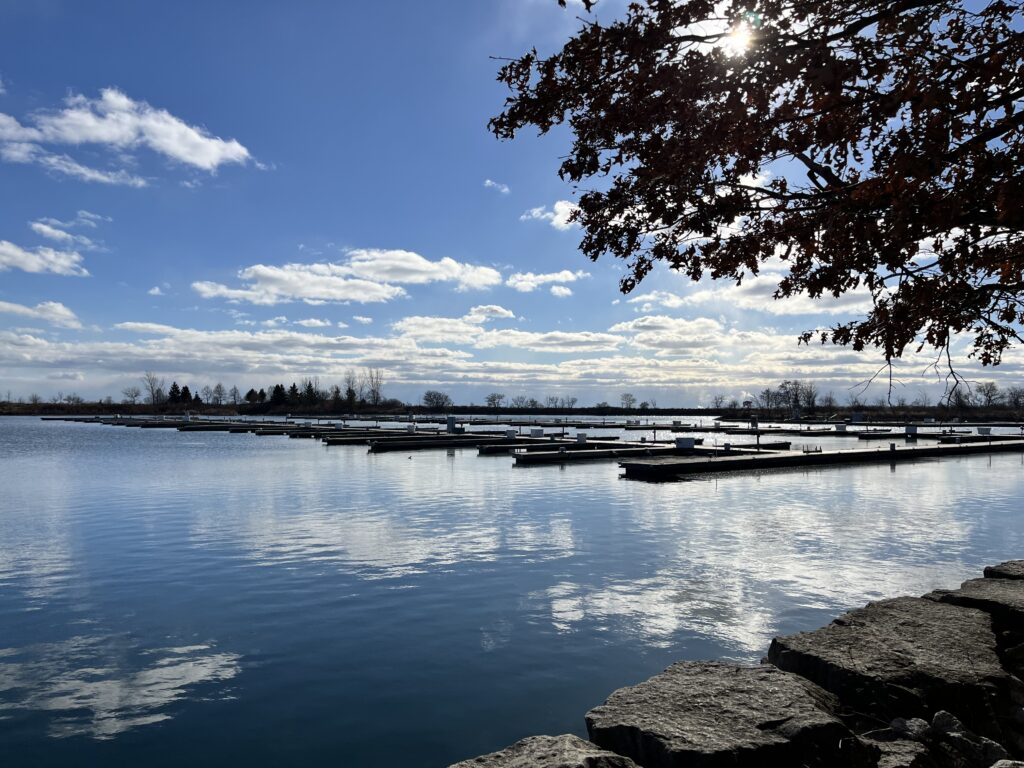
It also dislikes damp areas so, although you can find it along shorelines, it will not be close to the water itself like some of its cousins.
This shrub likes rocky, tough soil to survive which is why it is so successful in places like the Canadian Shield.
Found On These ForestQuests
Colonel Samuel Smith Park
Humber Arboretum
Threats
Luckily this plant is very hardy and does not have any outlying conditions that are threatening its survival.
However, it does have a poisonous cousin that looks like it that you have to be aware of.
However, the main difference is that the poisonous staghorn is always found in marshy areas near the water.
While the Staghorn Sumac will be on rockier terrain or elevated terrain away from the water.