Walking around you may notice a large shadow suddenly fly over you. What you just witnessed is one of the largest species of birds that can be seen in Canada.
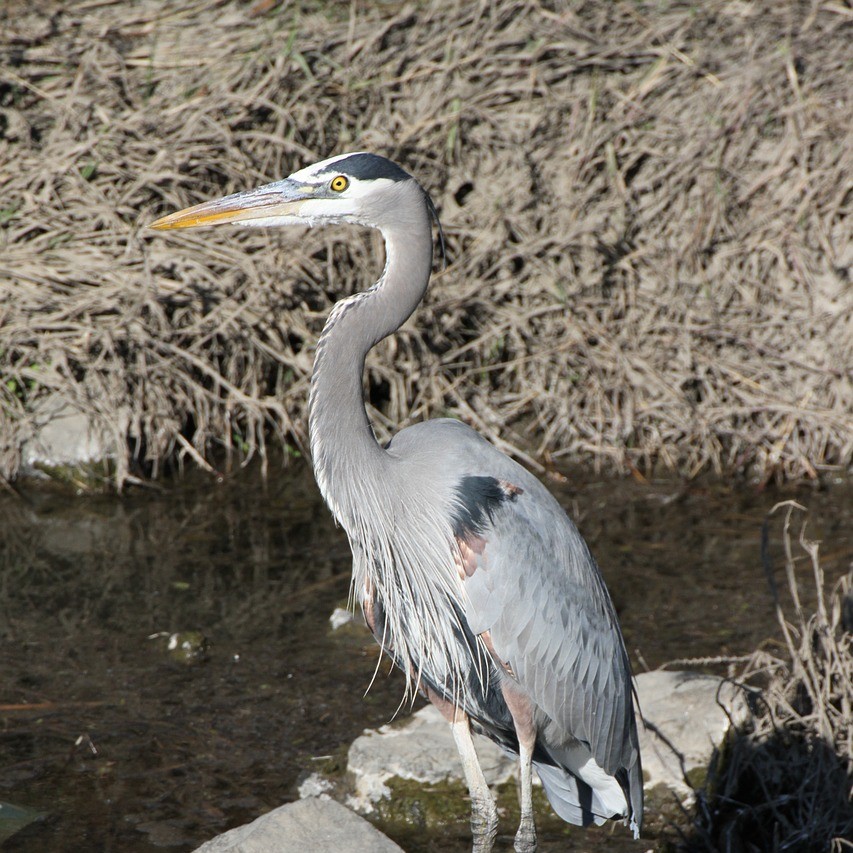
The Great Blue Heron is a striking bird with bright blue plumage, stands about 1m tall and has a wingspan of up to 2 meters!
Did you know? This bird can live up to 17 years old- making it categorized as a long-lived bird amongst bird enthusiasts and conservationists.
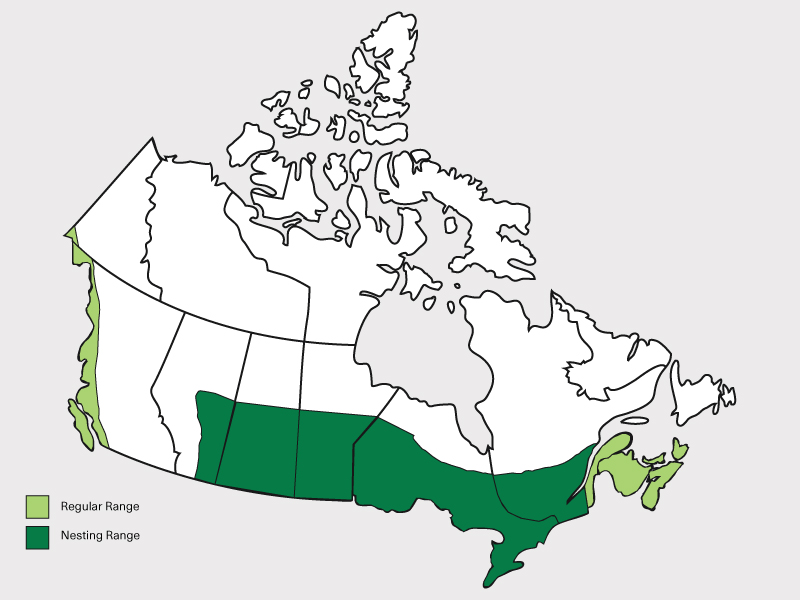
This bird requires both land and water to thrive and although primarily found in the coastal regions of the country, they come more inland during breeding season.
If you see one of these- you will probably see more than one as colony populations can reach the high hundreds.
Toronto in particular has many sightings of these big birds due to our numerous conservation areas that are wetland ecosystems.
During the nesting season, these birds will forego larger bodies of water to lay their nests at the highest point of trees to keep their young away from most predators.
Furthermore, this bird is primarily carnivorous- eating mainly fish, amphibians and small rodents like squirrels.
Habitat
The Great Blue Heron has a massive range due to its ability to fly vast distances.
During the winter months, the Great Blue Heron can be found in the coastal areas of Canada where they spend great amounts of time out on the Atlantic and Pacific catching fish.
Once it starts to warm up, they leave the coastal waters and head inland for easier prey for their young to feed on.
Due to this behaviour, you are likely to see Great Blue Herons in most parts of the country.
Found On These ForestQuest
Colonel Samuel Smith Park
Humber Arboretum
Threats
The Great Blue Heron has been listed under the COSEWIC (The Committee on the Status of Endangered Wildlife in Canada) as a special concern- however, this only pertains to the population found on the Pacific Ocean.
This difference in population trends seems to be due to habitat loss and a lack of ability to find appropriate nesting areas when the time comes for that population to go out.
Overall, the population trends for this bird are stable but there are two main disturbances for these herons.
Eagles and Humans are the main threats to this bird population with humans being the biggest reason for failure to nest properly.
Herons were once hunted due to their striking plumage and now- the wetlands and forests they use for nesting are being cut down or developed.