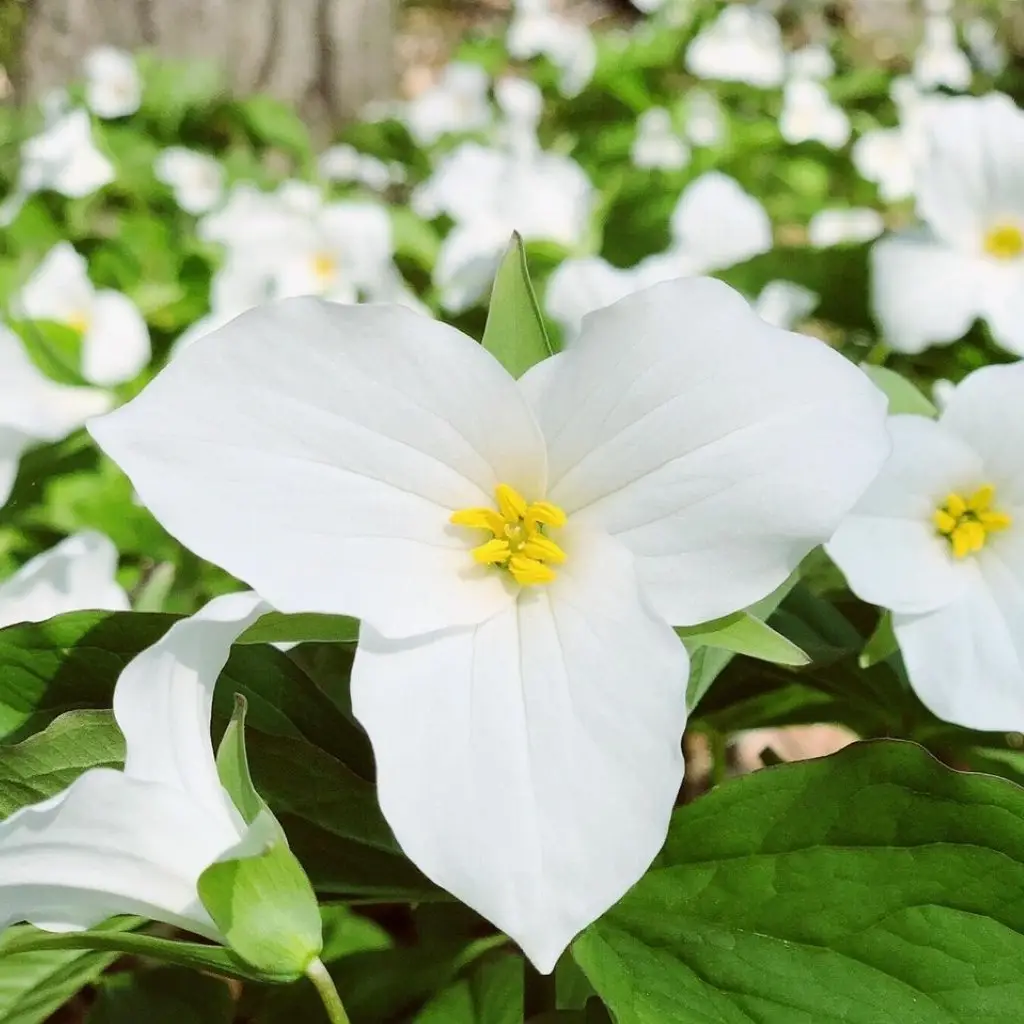
The White Trillium is a herb-plant used for its healing properties and is also known as the representative flower of Ontario due to its widespread range and commonality in the province.
White Trillium can be easily identified due to its large white flowers with three large white petals. The plant is found close to the forest floor and is very sensitive to light.
Due to this sensitivity, it does well in well-shaded mixed forests and areas where the flower will not be hit with direct sunlight.
This flower is loved by white-tailed deer in particular is eaten as a core part of their diet.
During the spring and fall, this plant will begin to spread its seeds by attracting ants to its flowers. The ants cannot digest the seeds and are brought to wherever the ants excrement them.
Habitat
Due to the structure of this plant having rhizomes (a clustered root system), it can dig deep into soils that are hardier like the Canadian Shield.
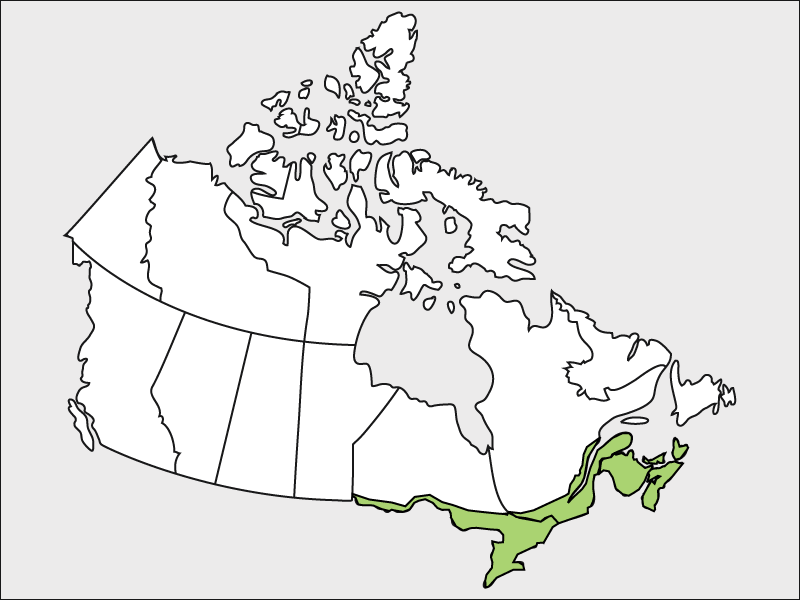
The White Trillium has a huge range going from the northern parts of Georgia in the states to northern parts of Ontario. It can also be found in various clusters in other eastern provinces like Nova Scotia and Quebec.
However, Ontario is where the plant seems to thrive due to the specific conditions that Trilliums need to grow.
Along with being found in the Canadian Shield ecosystem, it can also be found further south in mixed-wooded areas.
Did you know?: It is not illegal to pick trilliums, however, it is highly cautioned against, picking the flower may damage it. Picking only the flower will kill the rest of the plant due to its dependence on its wide petals to absorb nutrients.
Found On These ForestQuests
Cedarvale Park
High Park
Threats
What you will notice about this plant is that it has a large range BUT it has specific conditions to thrive.
This species is highly susceptible to habitat loss due to rising temperatures and extreme weather.
Although this species is the most common Trillium in Ontario, the populations of Trilliums are decreasing each year.
Furthermore, nurseries find it extremely difficult to grow trilliums due to their specific needs so it is not recommended to try to have a domesticated garden with this plant.
Due to being so close to the forest floor, these plants are prone to parasitic infection, if you see green strips on the flowers- that means that the plant is not healthy.